
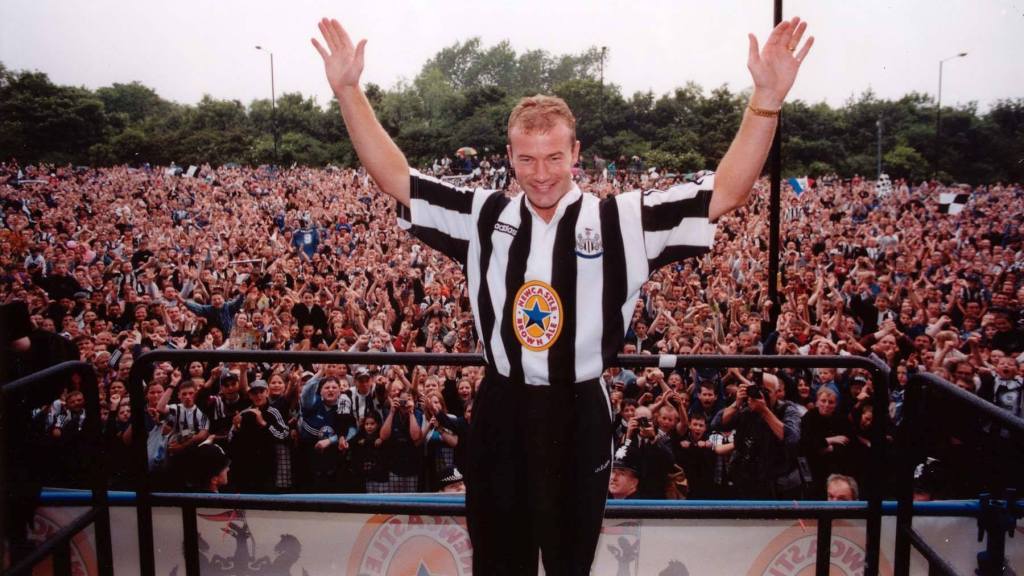
How the world’s most expensive footballer chose loyalty over legacy – and what it reveals about the strategic miscalculations that define modern football
The summer of 1996 belonged to England. Euro ’96 had captured the nation’s imagination like no tournament before or since, with “Football’s Coming Home” echoing from every pub, living room, and street corner across the country. At the heart of England’s golden run was Alan Shearer – the tournament’s top scorer, the golden boot winner, and suddenly the most coveted striker on the planet.
But as the euphoria of that magical summer faded and the transfer window opened, Shearer faced a choice that would define not just his career, but reshape our understanding of how football’s biggest decisions are really made. Manchester United wanted him. So did Newcastle United. The fee would be the same – a world record £15 million. The difference lay in what each club represented, and what that choice would ultimately cost.
This is the story of a transfer that looked like the safest bet in football, but became one of the game’s greatest strategic miscalculations. It’s about how conventional wisdom can be spectacularly wrong, how loyalty can trump logic, and why sometimes the biggest risk is playing it safe.
The Golden Summer That Changed Everything
Euro ’96 wasn’t just a tournament – it was a cultural phenomenon. For six weeks, England had rediscovered its love affair with football, and Alan Shearer was the leading man. Five goals in six games, including that thunderous strike against Germany in the semi-final that had Wembley believing, truly believing, that football was finally coming home.
The tournament transformed Shearer from prolific Premier League striker into global superstar. At 26, he was entering his prime, combining the raw power that had made him Blackburn’s title-winning talisman with a tactical intelligence that made him unplayable. Every major club in Europe wanted him, but the real battle would be fought much closer to home.
Manchester United had been watching Shearer for years. Alex Ferguson had tried to sign him before his move to Blackburn in 1992, and the interest had never waned. United were the defending Premier League champions, but they were also a team in transition. The previous season had seen Ferguson field a team packed with academy graduates – the famous “kids” that pundit Alan Hansen had dismissed with his now-infamous prediction: “You can’t win anything with kids.”
Hansen’s words had been proven spectacularly wrong. Those kids – David Beckham, Paul Scholes, Nicky Butt, Gary and Phil Neville – had helped United win the Double, overturning a 12-point deficit to pip Newcastle to the title in one of the most dramatic title races in Premier League history. But Ferguson knew his young team needed a proven goalscorer, someone who could guarantee goals in the biggest moments. Shearer was that man.
The Hometown Hero’s Dilemma
While United represented the future of English football, Newcastle offered something more powerful: the chance to come home. Shearer had been born in nearby Gosforth, raised on stories of Newcastle’s glory days, and had spent countless Saturday afternoons on the Gallowgate End as a boy. This wasn’t just another transfer – it was a homecoming.
Newcastle’s pitch was compelling. Under Kevin Keegan, they had transformed from Second Division strugglers into the most entertaining team in England. The “Entertainers” had come agonizingly close to the title, leading by 12 points in January before United’s relentless pursuit caught them. But they had proven they could compete with the best, and with Shearer leading the line, surely they could go one better.
The financial package was identical – £15 million, making Shearer the world’s most expensive player. But the strategic contexts couldn’t have been more different. United were building a dynasty around youth and tactical innovation. Newcastle were trying to buy one with experience and star power.
Keegan’s vision was intoxicating. He painted a picture of Shearer leading Newcastle to their first major trophy since 1969, of St. James’ Park rocking to the goals of its prodigal son. The emotional pull was undeniable, but it masked some uncomfortable truths about Newcastle’s long-term prospects.
The Strategic Miscalculation
On paper, Newcastle looked like the safer choice. They had just finished second in the Premier League, playing the kind of attacking football that had neutrals falling in love with the game. They had Les Ferdinand, David Ginola, and Faustino Asprilla – genuine world-class talents who could provide the service Shearer craved. Most importantly, they offered him the chance to be the main man, the focal point of everything they did.
United’s offer was more complex. Ferguson’s team was evolving rapidly, with young players who were still learning their trade alongside established stars like Eric Cantona and Roy Keane. There would be no guarantees of being the automatic first choice, no promise that the team would be built around Shearer’s strengths. But there was something else – the promise of sustained success, of being part of something that could dominate English football for years to come.
The decision revealed a fundamental misunderstanding of how football was changing. Newcastle’s approach was rooted in the old model – sign the best players, pay them well, and hope their individual brilliance would translate into collective success. United were pioneering something different – a systematic approach that prioritized the team over any individual, no matter how talented.
When Shearer chose Newcastle, it seemed like vindication of the traditional approach. Here was the world’s best striker choosing loyalty and emotion over the cold calculation of Manchester United’s machine. The football world applauded his decision, praising him for choosing his heart over his head.
But football has a way of exposing romantic notions to harsh reality.
The Nearly There Moments
What followed were ten years of exquisite torture for Shearer and Newcastle fans alike. The goals flowed – 206 in 405 appearances, making him the club’s all-time leading scorer. But the trophies never came, despite coming heartbreakingly close on multiple occasions.
The most painful near-misses came in consecutive FA Cup finals in 1998 and 1999. Both times, Newcastle reached Wembley with Shearer as captain, the hometown hero leading his boyhood club toward glory. Both times, they lost 2-0 – first to Arsenal, then to Manchester United. The irony was cruel: the team Shearer had rejected was denying him the very success he had sacrificed United for.
Those defeats were more than just disappointments – they were symbols of Newcastle’s fundamental limitations. Despite their attacking brilliance, they lacked the tactical discipline and mental strength required to win the biggest games. Keegan’s romantic vision of free-flowing football was beautiful to watch, but it wasn’t built to last.
Meanwhile, United were systematically dismantling English football. The kids Hansen had dismissed were winning title after title, developing into one of the greatest teams in the club’s history. Beckham, Scholes, and the Nevilles became household names, their success a constant reminder of the path Shearer had chosen not to take.
The Cost of Loyalty
By the time Shearer retired in 2006, the true cost of his decision was clear. Newcastle had won nothing – not a single trophy in his entire decade at the club. United, meanwhile, had won seven Premier League titles, one FA Cup, and the Champions League. The kids had grown into legends, while Shearer’s loyalty had been rewarded with nothing but heartbreak.
The numbers tell the story starkly. In the ten years after Shearer joined Newcastle, United won 12 major trophies. Newcastle won zero. It wasn’t just about individual glory – it was about being part of something historic versus being the star of something that ultimately achieved nothing.
Shearer himself has acknowledged the trade-off. “I know that I’ve missed out on a lot of trophies,” he admitted years later. “I’d have won so many more trophies with United. I know that. But I wouldn’t change it.” It’s a statement that encapsulates both the nobility and the tragedy of his choice – the recognition that loyalty sometimes comes at the highest possible price.
The Bigger Picture
Shearer’s transfer wasn’t just about one player’s career – it was a case study in how football’s power structures were shifting. Newcastle represented the old guard, clubs that relied on individual brilliance and local passion to compete. United represented the new model – systematic, strategic, and utterly ruthless in their pursuit of success.
The decision also highlighted the dangers of romantic thinking in professional sport. Shearer’s choice was emotionally satisfying, but strategically flawed. He prioritized short-term sentiment over long-term success, and football’s unforgiving nature exposed that miscalculation over the following decade.
For Newcastle, signing Shearer was both their greatest triumph and their biggest mistake. They got their hero, but they also got a player whose presence masked their fundamental structural problems. Instead of building a sustainable system, they built everything around one man – and when that man couldn’t single-handedly deliver trophies, the whole project crumbled.
The Voice of Saturday Night Football
Today, Shearer has found a different kind of success. Since 2006, he has been the face of BBC’s Match of the Day, the voice that millions of football fans associate with their Saturday night ritual. His analysis is sharp, his presence commanding, and his status as a pundit has arguably outlasted his playing career in terms of cultural impact.
There’s a beautiful irony in Shearer’s post-playing career. The man who never won a major trophy with his beloved Newcastle has become the voice of English football, analyzing the very trophies that eluded him as a player. Every Saturday night, he dissects the games, celebrates the goals, and discusses the tactical nuances that might have made the difference in his own career.
For football fans around the world – including those watching from afar in places like America – Shearer’s voice has become synonymous with the Premier League itself. He may not have the trophy cabinet of his contemporaries, but he has something perhaps more valuable: the respect and affection of an entire generation of football supporters.
Legacy of a Choice
Alan Shearer’s transfer to Newcastle United stands as one of football’s great what-ifs. It’s a reminder that in sport, as in life, the safest choice isn’t always the smartest one. Sometimes loyalty is its own reward, but sometimes it’s a luxury that professional athletes can’t afford.
The transfer also marked a turning point in how we think about player decisions. Shearer chose with his heart, prioritizing emotion over strategy. Modern players, armed with better data and more sophisticated analysis, are less likely to make such romantic choices. The game has become more clinical, more calculating – perhaps necessarily so.
But there’s something admirable about Shearer’s decision, even in hindsight. In an era where players routinely chase trophies and money across continents, his commitment to Newcastle represents a different set of values. He chose to be a legend at one club rather than a winner at another, and while that choice cost him silverware, it gave him something else: a unique place in football folklore.
The boy from Gosforth who dreamed of playing for Newcastle got his wish. The fact that the dream didn’t include the trophies he deserved doesn’t diminish its power – it just makes it more human, more relatable, and ultimately more compelling.
In the end, Alan Shearer’s £15 million transfer wasn’t just about football – it was about the choices we all make between security and ambition, between loyalty and success, between the heart and the head. That he chose loyalty makes him a romantic hero. That it cost him everything he wanted to achieve makes him a tragic one.
And perhaps that’s the most fitting legacy of all for a player who embodied everything beautiful and heartbreaking about the game we love.
This is the second installment of “The Transfer Files” – an investigative series examining the strategic decisions that shaped modern sport. Next month: How Lewis Hamilton’s calculated gamble on Mercedes in 2013 transformed Formula 1’s power dynamics forever.
 SportsFuelr
Leave a comment