Author: Nye Davies

  • Dutch Grand Prix 2025: Heartbreak and Triumph at Zandvoort

    Dutch Grand Prix 2025: Heartbreak and Triumph at Zandvoort

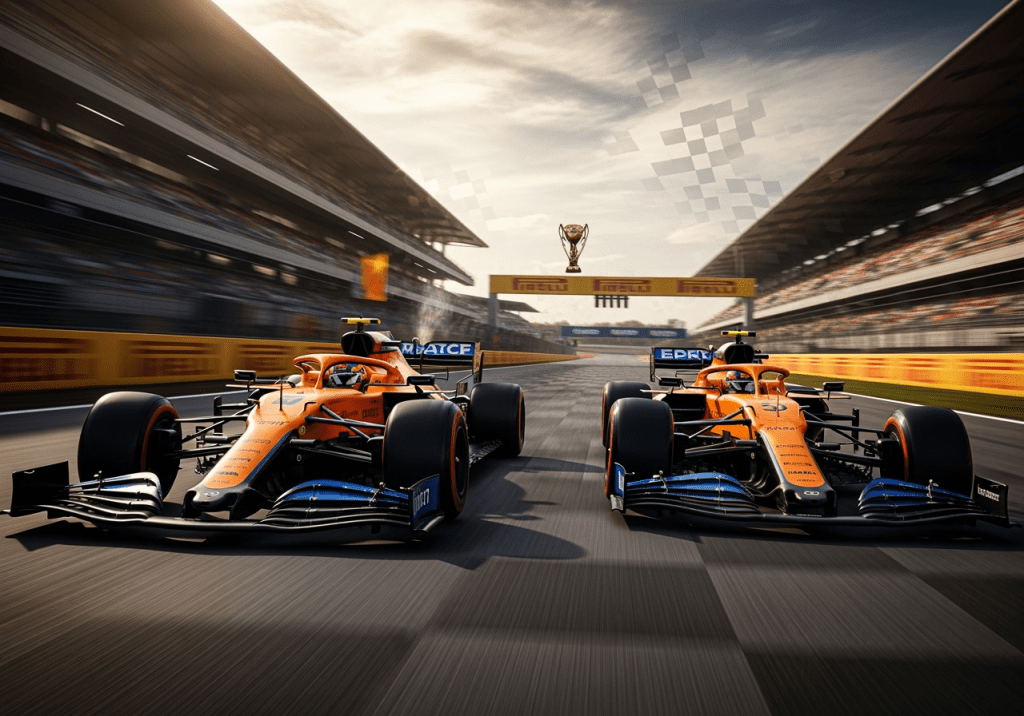
    Round 15 delivers championship drama, breakthrough success, and crushing disappointment in equal measure


    🏁 Quick Race Summary

    Winner: Oscar Piastri (McLaren) – 7th victory of 2025
    Championship Gap: Piastri extends lead to 34 points over Norris
    Breakthrough Star: Isack Hadjar claims maiden F1 podium
    Disaster Zone: Ferrari suffers double DNF nightmare


    The 2025 Dutch Grand Prix at Zandvoort delivered one of the most dramatic and emotionally charged race weekends of the season, fundamentally altering the championship landscape between McLaren teammates Oscar Piastri and Lando Norris. What began as a promising weekend for the British driver ended in heartbreak, while his Australian teammate capitalized to extend his championship lead in spectacular fashion. Meanwhile, a breakthrough performance from Isack Hadjar provided one of the season’s most heartwarming stories, and Ferrari endured their worst nightmare with a double retirement.

    💡 Key Takeaway: A single race weekend perfectly encapsulated everything that makes Formula 1 the world’s most unpredictable sport.


    📅 Friday Practice Sessions: Mixed Fortunes Across the Grid

    The weekend began with encouraging signs for Lando Norris, who demonstrated exceptional pace throughout both Friday practice sessions. The British driver topped all three practice sessions leading into qualifying, showcasing the kind of form that had brought him five victories earlier in the season.

    McLaren’s technical superiority was evident from the opening session, with both drivers consistently running at the sharp end of the timing sheets. The team’s engineers worked methodically through their setup programs, fine-tuning the MCL39 for what promised to be another dominant weekend.

    Oscar Piastri, while not matching his teammate’s outright pace during practice, remained within striking distance and focused on race preparation. The Australian’s approach suggested a driver confident in his championship position but determined not to become complacent.

    Ferrari’s Friday was described by team principal Fred Vasseur as “very poor,” with both Lewis Hamilton and Charles Leclerc struggling to find the right balance with their SF-25. The team worked frantically through the sessions to understand their car’s behavior on the challenging Dutch circuit.


    🏎️ Saturday Qualifying: The Tables Turn When It Matters

    Despite Norris’s dominance throughout practice, Saturday’s qualifying session witnessed a dramatic reversal of fortune that would prove crucial to the weekend’s outcome.

    🥇 Qualifying Results (Top 10)

    1. Oscar Piastri (McLaren) – Pole position
    2. Lando Norris (McLaren) – Front row lockout
    3. Max Verstappen (Red Bull) – Home hero’s hope
    4. George Russell (Mercedes)
    5. Charles Leclerc (Ferrari)
    6. Lewis Hamilton (Ferrari)
    7. Isack Hadjar (Alpine)
    8. Kimi Antonelli (Mercedes)
    9. Carlos Sainz (Williams)
    10. Fernando Alonso (Aston Martin)

    Oscar Piastri delivered when it mattered most, claiming pole position with a stunning lap that caught many observers by surprise. The pole-winning lap was a masterclass in precision and commitment, demonstrating the mental strength that has defined his championship-leading campaign.

    Norris, despite his Friday pace advantage, had to settle for second place on the grid. The disappointment was evident, but the British driver remained optimistic about his race prospects.


    🏁 Sunday Race: Drama, Heartbreak, and Championship Implications

    The race itself unfolded as one of the most emotionally charged and strategically complex encounters of the 2025 season.

    🚦 The Opening Exchanges

    Lando Norris made an aggressive start from second place, immediately putting pressure on pole-sitter Piastri. However, the Australian demonstrated the racecraft that has characterized his championship campaign, maintaining his lead through the opening corners.

    Max Verstappen, energized by the support of the Orange Army, managed to capitalize on the McLaren battle to briefly challenge for second place on the opening lap.

    ⚡ The Mid-Race Battle and Ferrari’s Nightmare

    As the race progressed, Norris demonstrated his fighting spirit by reclaiming second place from Verstappen after several laps of intense wheel-to-wheel combat. The British driver’s overtake was executed with precision and commitment.

    Meanwhile, Isack Hadjar was quietly mounting his own charge through the field, making excellent strategic calls with his pit stops and capitalizing on the battles ahead.

    💥 Ferrari’s Double Disaster

    Ferrari’s race began to unravel in dramatic fashion:

    Lewis Hamilton’s Crash:

    • Lost control under braking into Turn 3
    • Described experiencing “a sudden snap”
    • Damp patch on paint outside racing line sealed his fate
    • “I felt comfortable in the car and the pace was encouraging, but unfortunately I lost the rear under braking into Turn 3,” Hamilton explained

    Charles Leclerc’s Collision:

    • Making strong progress through the field
    • Had passed George Russell and was closing on podium positions
    • Collision with Kimi Antonelli ended his race prematurely
    • “Today hurts. It was a difficult weekend all along, and it ended in the worst way,” Leclerc reflected

    💔 The Cruel Twist for Norris

    With just seven laps remaining and the race seemingly heading toward another McLaren one-two finish, disaster struck for Lando Norris. An oil leak developed in his McLaren, forcing him to retire from second place in what can only be described as one of the cruelest moments of the 2025 season.

    The retirement was particularly heartbreaking given Norris’s strong performance throughout the race and his need for maximum points in the championship battle.

    🏆 Piastri’s Controlled Victory and Hadjar’s Breakthrough

    With his teammate’s retirement, Oscar Piastri was left to manage the final laps and claim his seventh victory of the 2025 season. The Australian’s drive was a masterclass in race management.

    Behind him, Isack Hadjar was experiencing the drive of his life. The 22-year-old French driver held his nerve in the closing stages to secure third place and his maiden Formula 1 podium.


    🏁 Final Race Results

    PositionDriverTeamPointsStatus
    1stOscar Piastri 🇦🇺McLaren25Winner
    2ndMax Verstappen 🇳🇱Red Bull18Home Hero
    3rdIsack Hadjar 🇫🇷Alpine15First Podium!
    4thGeorge Russell 🇬🇧Mercedes12Points
    5thCarlos Sainz 🇪🇸Williams10Points

    ❌ Notable Retirements

    • Lando Norris (McLaren) – Oil leak, lap 65/72
    • Lewis Hamilton (Ferrari) – Crash, Turn 3
    • Charles Leclerc (Ferrari) – Collision with Antonelli

    📊 Updated Championship Standings

    🏆 Drivers’ Championship (Top 5)

    PosDriverTeamPointsGap
    1stOscar Piastri 🇦🇺McLaren309Leader
    2ndLando Norris 🇬🇧McLaren275-34
    3rdMax Verstappen 🇳🇱Red Bull205-104
    4thGeorge Russell 🇬🇧Mercedes184-125
    5thCharles Leclerc 🇲🇨Ferrari151-158

    Championship Alert: The 34-point gap represents Piastri’s largest lead of the season with 9 races remaining.


    🎙️ Post-Race Reactions: Raw Emotion and Professional Resolve

    💔 Lando Norris: Devastation and Determination

    “It hurts. We had the pace to win today, and to lose it like this with just a few laps to go is devastating. These things happen in racing, and we have to accept it and move forward. The championship isn’t over, and I’ll keep fighting until the very end.”

    🏆 Oscar Piastri: Measured Celebration

    “I had a really good weekend in the sessions where it mattered most. Obviously, it’s not the way you want to see your teammate’s race end, but I had to focus on bringing the car home. Lando drove an incredible race today, and he deserved to be on the podium.”

    🇳🇱 Max Verstappen: Home Hero’s Delight

    “To be back on the podium here at home feels incredible. The crowd has been amazing all weekend, and it’s great to give them something to cheer about. We’re not quite at McLaren’s level yet, but we’re getting closer.”

    🌟 Isack Hadjar: Dream Debut Podium

    “I can’t believe it. To get my first podium here at Zandvoort, it’s like a dream come true. The team has worked so hard this season, and to finally reward them with this result feels incredible. When I saw Norris retire, I knew I had a chance, but you never know in Formula 1 until you cross that line.”

    🔴 Ferrari’s Apologies and Looking Forward

    Lewis Hamilton:“While it’s disappointing, there are many positives to take from the weekend. I want to apologise to everyone in the team and to the tifosi — we had hoped to bring home more points today.”

    Charles Leclerc:“Heading to Monza now, which is a special place for me and the whole team. We will give it everything to recover and make it a great weekend for all our tifosi at home.”

    Fred Vasseur:“We knew Zandvoort wouldn’t suit us and the positive we can take away is that we had very strong pace today, but of course it’s not good to head home with zero points.”


    📈 Race Analysis: What This Means for the Championship

    🎯 Piastri’s Position

    • 7 wins from 15 races (46.7% win rate)
    • Can afford to finish 2nd in every remaining race and still win the title
    • Psychological advantage of leading by over 30 points

    ⚡ Norris’s Challenge

    • Needs to outscore Piastri by 4+ points per race on average
    • Requires multiple wins and Piastri retirements/poor finishes
    • Mental resilience test after cruel Zandvoort retirement

    📊 Mathematical Scenarios

    • Maximum points remaining: 234 (9 races × 26 points)
    • Norris needs: Minimum 35-point swing
    • Piastri’s cushion: Can lose 33 points and still win title

    🌟 The Hadjar Factor: A New Star Emerges

    Isack Hadjar’s maiden podium represents one of the season’s most positive stories. The young Frenchman’s rise through the ranks has been steady and impressive, marking him as one of Formula 1’s rising stars.

    📊 Hadjar’s 2025 Journey

    • Age: 22 years old
    • Previous best finish: 6th place
    • Points before Dutch GP: 22
    • Points after Dutch GP: 37
    • Career milestone: First F1 podium

    The emotional scenes on the podium, with Hadjar barely able to contain his joy, reminded everyone why Formula 1 remains such a compelling sport.


    🔴 Ferrari’s Darkest Hour

    For Ferrari, the Dutch Grand Prix represented everything that can go wrong in Formula 1. The double retirement was particularly painful given that both drivers had shown encouraging pace throughout the race.

    📉 Ferrari’s 2025 Struggles

    • Hamilton’s position: 6th in championship (109 points)
    • Leclerc’s position: 5th in championship (151 points)
    • Team performance: Below pre-season expectations
    • Monza pressure: Home race redemption needed

    🔮 Looking Ahead: What’s Next?

    🇮🇹 Italian Grand Prix Preview

    • Date: September 8, 2025
    • Circuit: Monza – “Temple of Speed”
    • Ferrari’s home race: Massive pressure to deliver
    • Championship implications: 8 races remaining after Monza

    🎯 Key Questions

    1. Can Norris bounce back psychologically from Zandvoort heartbreak?
    2. Will Ferrari find redemption at their home race?
    3. Is Piastri’s championship lead now unassailable?
    4. Can Hadjar build on his breakthrough podium?

    💬 Fan Reactions: Social Media Explodes

    #DutchGP trended worldwide with over 2 million tweets, showcasing the global impact of the weekend’s drama.

    📱 Top Social Media Moments

    • Most liked tweet: Hadjar’s podium celebration video (1.2M likes)
    • Most shared moment: Norris’s retirement reaction (800K shares)
    • Trending hashtags: #NorrisHeartbreak #HadjarMagic #FerrariNightmare
    • Fan polls: 73% believe Piastri will win the championship

    🏆 Race Statistics & Records

    📊 Key Numbers

    • Piastri wins in 2025: 7 (most by any driver)
    • McLaren wins: 12 from 15 races (80% win rate)
    • Championship lead: Largest of Piastri’s career
    • Hadjar’s age: 22 years, 156 days (youngest podium finisher of 2025)

    🎯 Historical Context

    • First time since 2016: Championship leader extends 30+ point gap this late in season
    • McLaren dominance: Most wins since their 2008 championship season
    • Verstappen’s home record: 4 consecutive Dutch GP podiums
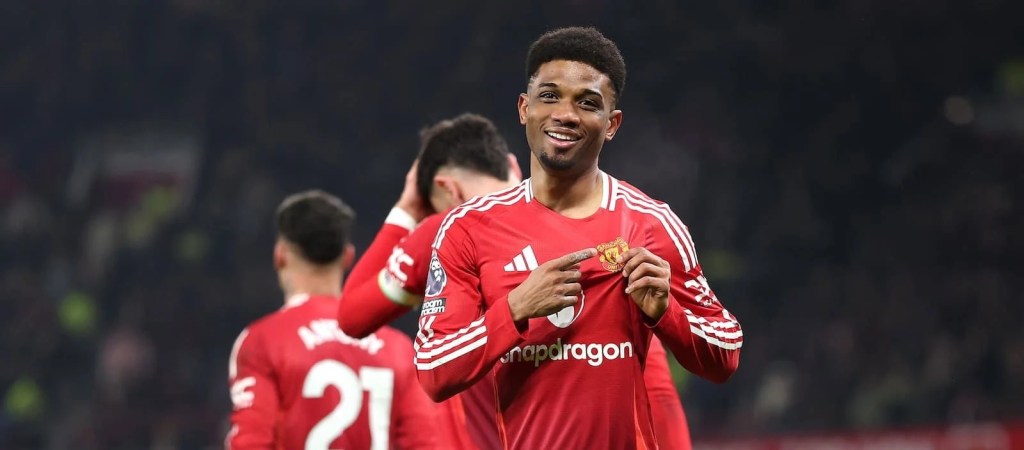
  • Tactical Analysis: Manchester United vs Burnley

    Tactical Analysis: Manchester United vs Burnley

    Published: August 31, 2025 | Premier League Match Report | Old Trafford

    TL;DR – Quick Match Summary

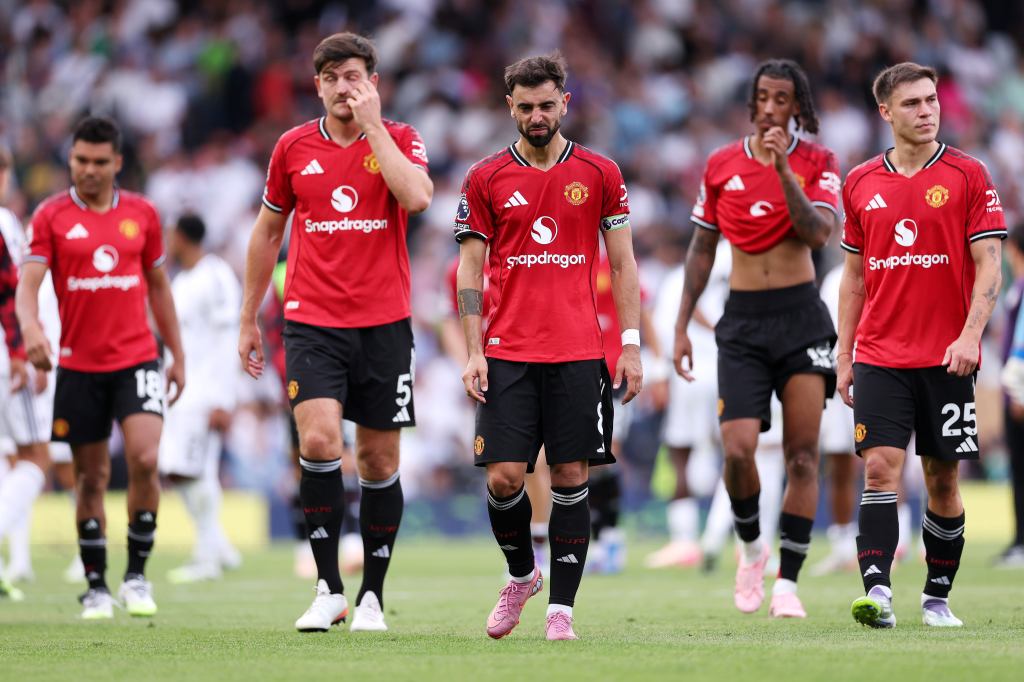
    This is what champions are made of. After weeks of frustration and near-misses, Manchester United finally delivered the character and quality that their summer investment promised. The 3-2 victory over Burnley wasn’t just about securing three points – it was about resilience, individual brilliance, and the fighting spirit that has always defined this great club.

    When the final whistle blew at Old Trafford, there was a sense that something had shifted. This wasn’t just another scrappy win against lower-league opposition. This was a statement of intent, a display of character, and most importantly, a glimpse of what this United team can become when everything clicks into place.


    The Story of a Dramatic Afternoon

    The afternoon began with cautious optimism from the 74,310 fans packed into Old Trafford. After the disappointments against Arsenal and Fulham, everyone knew this was a must-win fixture. What unfolded over the next 97 minutes was a masterclass in drama, resilience, and the kind of never-say-die attitude that has made Manchester United legendary.

    Josh Cullen’s 26th-minute own goal gave United the lead, but it was the manner of the build-up that caught the eye. The passing was crisp, the movement intelligent, and for the first time this season, there was a genuine sense of purpose about United’s play. Sometimes you need a bit of fortune to get the ball rolling, but the quality of play that created the opportunity was undeniable.

    The first major setback came just four minutes later when Matheus Cunha was forced off through injury. The Brazilian had been showing promising signs in his partnership with the other new signings, and losing him so early could have disrupted United’s entire game plan. Instead, Joshua Zirkzee’s introduction maintained the attacking threat and showed the kind of squad depth that championship teams require.

    Mason Mount’s first-half performance was nothing short of exceptional. The former Chelsea midfielder looked like the player United thought they were signing – energetic, creative, and perfectly suited to Amorim’s tactical system. His understanding with his teammates was growing by the minute, and his work rate epitomized everything positive about United’s approach. When he was forced off at half-time through injury, it felt like another cruel blow to United’s momentum.

    But this is where the character of the team truly shone through. Kobbie Mainoo’s introduction brought fresh energy to the midfield, and rather than allowing the injuries to derail their performance, United seemed to find an extra gear.

    StatisticsManchester UnitedBurnley
    Goals32
    Shots1912
    Shots on Target85
    Possession67%33%
    Pass Accuracy87%79%
    Total Passes542267
    Corners113
    Fouls814
    Yellow Cards24
    Offsides32
    Saves35

    Key Stats: United dominated possession and created significantly more chances, but Burnley’s clinical finishing kept them in the game until the final moments.


    Amad’s Breakthrough: A Star is Born

    If there was one player who embodied United’s fighting spirit and quality, it was Amad Diallo. The young winger was absolutely electric throughout the afternoon, causing Burnley constant problems with his pace, skill, and football intelligence. This wasn’t just a good performance – this was a statement that announced Amad as a genuine first-team player.

    His movement down the right flank was a constant source of danger for Burnley. Every time he received the ball, there was a sense of anticipation from the crowd, a feeling that something special might happen. His work rate was exemplary, tracking back to help defensively while never losing his attacking instincts.

    The defining moment came in the 97th minute when his intelligent movement in the box drew the foul that led to the winning penalty. It was the kind of clever play that separates good players from great ones, and it epitomized everything that had been impressive about his performance throughout the match.

    When Sky Sports announced him as Man of the Match, it felt thoroughly deserved. This was the breakthrough performance United fans have been waiting for, and it suggests that Amad could be a crucial player in the months ahead.


    Mbeumo’s Magic Moment

    Bryan Mbeumo’s first goal in a Manchester United shirt couldn’t have been timed more perfectly. Just two minutes after Lyle Foster had equalized for Burnley in the 55th minute, the former Brentford winger showed exactly why United invested in his pace and directness.

    The goal itself was a thing of beauty – a clinical finish that demonstrated both composure and quality under pressure. But it was the timing that made it truly special. When teams concede equalizers, there’s always a danger of heads dropping and momentum shifting. Instead, Mbeumo’s immediate response sent a message to both his teammates and the opposition that this United team wasn’t going to be denied.

    The celebration that followed got Old Trafford rocking in a way we hadn’t seen all season. There’s something special about a player’s first goal for the club, and Mbeumo’s joy was infectious. It was a moment that perfectly captured the growing belief within this United squad.

    His overall performance was equally impressive. The pace and directness that made him such a threat at Brentford translated perfectly to United’s system, and his work rate throughout the match showed the kind of commitment that endears players to the Old Trafford faithful.


    The Captain’s Redemption

    When Bruno Fernandes stepped up to take that 97th-minute penalty, every United fan would have been thinking about the miss against Fulham. Penalty misses happen to the best players, but they can also create doubt and hesitation in crucial moments. Not for Bruno Fernandes.

    The Portuguese midfielder’s approach to the penalty was everything you’d want from a United captain. There was no hesitation, no visible nerves, just the kind of ice-cold composure that has made him such a crucial player since his arrival at Old Trafford. When the ball hit the back of the net, it wasn’t just a goal – it was a statement of character and leadership.

    Throughout the match, Fernandes had shown exactly why he wears the armband. His passing was incisive, his work rate exemplary, and his leadership visible in every interaction with his teammates. The penalty was simply the perfect culmination of a captain’s performance.

    The redemption narrative writes itself, but it’s important to remember that great players are defined not by their mistakes but by how they respond to them. Fernandes’ response was perfect.


    Fan Reactions: Old Trafford Erupts

    The social media reaction after the final whistle captured the pure joy and relief of finally securing that first win of the season.

    Pure Emotion & Relief

    “That’s the United spirit we’ve been missing all season!” – @RedDevilsForever
    “97th minute penalty… my heart can’t take much more of this!” – @RedArmy1878
    “Old Trafford was rocking today – atmosphere was back to its best” – @ManchesterUnited_
    “First win of the season and it feels like the start of something special” – @RedMancunian

    Individual Player Praise

    “Amad was absolutely electric – Man of the Match performance, what a player!” – @UnitedFan2025
    “Bruno showing why he’s captain – stepped up when it mattered most” – @OldTraffordVoice
    “Mbeumo’s first goal and what a time to score it! Perfect timing!” – @MUFCAnalysis
    “Mount was brilliant before his injury – hope it’s nothing serious” – @UnitedUpdate

    Team Character & Fight

    “This is what United is about – never giving up, fighting until the end” – @StretchyNews
    “Two injuries, two equalisers, still found a way to win – that’s champions mentality” – @UnitedStandMUFC
    “If we can show this character every week, we’ll be fine this season” – @MUFCReview

    Squad Depth Recognition

    “Zirkzee and Mainoo stepped up perfectly when called upon – squad depth!” – @TheUnitedWay
    “Amad Diallo take a bow – that was a star performance from start to finish” – @MUFCScoop

    Looking Ahead

    “International break comes at perfect time to build on this momentum” – @UnitedJournal
    “This felt like a turning point – the moment everything started clicking” – @UnitedUpdate

    The Consensus: Pure relief mixed with genuine excitement about what this team can achieve when they show this kind of character and individual quality.


    Tactical Evolution: Amorim’s Vision Taking Shape

    Despite the early injury to Cunha and Mount’s half-time withdrawal, United’s tactical approach showed real promise throughout the afternoon. The 3-4-2-1 formation that Amorim has been developing finally looked like it was working, with players understanding their roles and the system providing both defensive stability and attacking threat.

    The wing-back system was particularly effective, with Diogo Dalot providing constant width and attacking impetus down the right flank. His understanding with Amad created numerous opportunities, and his defensive work rate showed the kind of two-way commitment that makes wing-back systems successful.

    The central defensive partnership of Leny Yoro and Matthijs de Ligt continues to develop impressively. Both players bring different qualities – Yoro’s pace and composure, de Ligt’s experience and aerial ability – and their understanding is growing with each match. Against Burnley’s physical approach, they stood firm and showed the kind of resilience that championship defenses are built on.

    Perhaps most encouragingly, when injuries forced tactical adjustments, United adapted seamlessly. Zirkzee’s introduction maintained the attacking threat, while Mainoo’s energy in midfield helped United maintain their dominance. This kind of tactical flexibility and squad depth will be crucial as the season progresses.


    The Burnley Challenge: Credit Where Due

    While the focus naturally falls on United’s performance, credit must go to Burnley for the way they approached this match. The newly promoted side didn’t come to Old Trafford to make up the numbers – they came to compete, and they made United work for every moment of the victory.

    Lyle Foster’s 55th-minute equalizer was a well-taken goal that showed Burnley’s quality in attacking transitions. The striker’s movement was intelligent, his finish was clinical, and it reminded everyone that Premier League football is never easy, regardless of the opposition.

    Jaidon Anthony’s 67th-minute equalizer was even more impressive, showing the kind of technical quality that earned Burnley their promotion. The winger’s finish was composed and confident, and it set up the dramatic finale that Old Trafford will remember for months to come.

    The fact that United had to dig deep and show character to overcome such determined opposition only makes the victory more meaningful. These are exactly the kind of games that define seasons, and United’s response when the pressure was highest bodes well for the challenges ahead.


    The Atmosphere Returns

    One of the most encouraging aspects of the afternoon was the return of Old Trafford’s famous atmosphere. The 74,310 fans created the kind of noise and energy that has been missing for too long, and their support was crucial in driving the team forward during the difficult moments.

    When Mbeumo scored his first goal, the eruption of joy was genuine and infectious. When Bruno stepped up for that crucial penalty, the tension was palpable but so was the belief. This is what Old Trafford is supposed to feel like, and having that atmosphere back will be invaluable as the season progresses.

    The connection between team and supporters felt stronger than it has in months. There was a sense that everyone – players, staff, and fans – was pulling in the same direction for the first time this season.


    Individual Brilliance in Collective Success

    While the team performance was encouraging, it was the individual moments of quality that ultimately decided the match. Amad’s electric display down the right flank, Mbeumo’s perfectly timed first goal, and Bruno’s nerveless penalty all showcased the kind of individual brilliance that United have been missing.

    These weren’t just good performances – they were statements of intent from players who are beginning to understand what it means to wear the United shirt. The pressure at Old Trafford is unlike anywhere else, and seeing these players rise to meet that challenge is genuinely exciting for what lies ahead.

    The injury setbacks to Cunha and Mount were disappointing, but they also created opportunities for others to step up. Zirkzee’s seamless integration and Mainoo’s energetic cameo showed that United’s squad depth is better than many had feared.


    Looking Forward: Building on the Foundation

    This victory provides the perfect foundation for United to build upon during the international break. The confidence gained from fighting back against adversity, the individual performances that showed real quality, and the return of Old Trafford’s atmosphere all point to better days ahead.

    The tactical system is clearly working, even when forced to adapt through injuries. The individual partnerships are developing, with Amad finding his role and Mbeumo showing his quality. Most importantly, the character and fighting spirit that defines Manchester United is clearly returning.

    When Cunha and Mount return from their injuries, this squad will have even more options and quality. The foundation has been laid, the system is working, and the belief is building. This felt like the moment when United’s season truly began.


    Final Thoughts: The Spirit Returns

    Manchester United 3-2 Burnley will be remembered as much more than just the first win of the season. It was the afternoon when the character returned, when individual quality shone through, and when Old Trafford remembered what it feels like to celebrate a dramatic victory.

    The injuries could have been excuses, the pressure could have been overwhelming, and the late equalizer could have broken spirits. Instead, United found a way to win, and they did it with the kind of style and character that has always defined this club.

    This is what progress looks like. Not perfect, not without challenges, but full of promise and built on the kind of foundations that championship teams require. The future looks bright, and performances like this suggest the wait for consistent success won’t be much longer.

    The spirit is back. The quality is emerging. The future is exciting.


    What moment from this dramatic victory will you remember most? Share your thoughts and let’s celebrate this breakthrough together!

  • The 2025 Formula 1 Season: A Championship Revolution in Progress

    The 2025 Formula 1 Season: A Championship Revolution in Progress

    The most dramatic F1 season in years sees McLaren’s young stars rewrite the championship narrative

    The 2025 Formula 1 season has delivered one of the most compelling championship battles in recent memory, marking a seismic shift in the sport’s competitive landscape that few could have predicted. For the first time since 2016, neither Lewis Hamilton nor Max Verstappen leads the drivers’ championship, as McLaren’s dynamic duo of Oscar Piastri and Lando Norris has emerged from the shadows to dominate both the headlines and the points table in spectacular fashion.

    What makes this season truly remarkable is not just the changing of the guard, but the manner in which it has unfolded. McLaren, a team that has endured years of mediocrity since their last championship glory in 2008, has suddenly found themselves with the most dominant car on the grid. The MCL39 has proven to be a masterpiece of engineering, capable of winning on every type of circuit from the tight confines of Monaco to the high-speed straights of Spa-Francorchamps.

    The Championship Battle That Has Everyone Talking

    After fourteen rounds of what can only be described as a masterclass in competitive racing, Oscar Piastri leads the drivers’ championship with 284 points, holding a slender nine-point advantage over his teammate Lando Norris, who sits on 275 points. This margin represents one of the closest championship battles between teammates in Formula 1 history, and the respect and maturity both drivers have shown while fighting for the ultimate prize has been nothing short of exemplary.

    Behind the McLaren duo, Max Verstappen finds himself in the unfamiliar position of third place with 187 points, a full 97 points behind the championship leader. For a driver who has become accustomed to dominating seasons, this represents his most challenging campaign since his championship-winning breakthrough in 2021. George Russell occupies fourth place with 172 points, providing Mercedes with their sole bright spot in what has otherwise been a disappointing season for the Silver Arrows.

    In the constructors’ championship, McLaren’s dominance is even more pronounced. With 559 points from their two drivers, they have established a commanding lead over Ferrari, Red Bull Racing, and Mercedes, who complete the top four in that order. The Woking-based team’s resurgence has been so complete that they have won eleven of the fourteen races contested so far, a strike rate that would make even the most dominant teams in F1 history envious.

    A Season of Stunning Victories and Dramatic Moments

    The season began in Melbourne with Lando Norris claiming pole position ahead of his teammate, setting the tone for what would become a McLaren-dominated campaign. The Australian Grand Prix weekend was marked by early drama as Jack Doohan crashed on the opening lap, while Carlos Sainz spun his Williams behind the Safety Car in what was meant to be his fresh start with the Grove-based team. Despite the chaos around him, Norris demonstrated the kind of championship-caliber composure that would become his trademark throughout the season, converting pole position into victory ahead of Max Verstappen and George Russell.

    The Chinese Grand Prix provided one of the season’s most memorable weekends, not least because of the drama surrounding Lewis Hamilton’s Ferrari debut. The seven-time world champion stunned the paddock by claiming his first Ferrari pole position in Sprint Qualifying, leading to a dominant victory in Saturday’s shortened race ahead of Piastri and Verstappen. However, Sunday’s main event belonged entirely to Oscar Piastri, who claimed his maiden career pole position with a stunning lap record before converting it into a commanding victory. The weekend’s drama was completed when Hamilton was disqualified from the main race due to a technical infringement, highlighting the early struggles that would plague Ferrari throughout the opening phase of the season.

    Japan’s Suzuka circuit has always been a happy hunting ground for Max Verstappen, and the Dutchman reminded everyone of his championship pedigree by claiming his fourth consecutive pole position there with a new track record of 1:26.983. Race day saw Verstappen deliver a masterful performance to secure his fourth consecutive Japanese Grand Prix victory, leading home the McLaren duo of Norris and Piastri. The weekend also witnessed history in the making as Kimi Antonelli became the youngest driver in Formula 1 history to both lead laps and set the fastest lap, breaking two significant records in a single afternoon and announcing himself as a future star of the sport.

    The Bahrain Grand Prix showcased Oscar Piastri’s growing maturity and racecraft as he claimed pole position ahead of his teammate in another McLaren front-row lockout. Lewis Hamilton’s struggles continued as he qualified a disappointing ninth, leading to a rare public apology to Ferrari and its fans. Race day belonged entirely to Piastri, who delivered a masterclass in race management to win by a commanding fifteen-second margin over George Russell, with Norris completing the podium. The victory marked McLaren’s first-ever triumph in Bahrain and served as Piastri’s second win of what was rapidly becoming a breakthrough season.

    The Saudi Arabian and Miami Grands Prix continued Piastri’s early-season dominance, with the young Australian showcasing the kind of consistency and pace that championship contenders are made of. His fourth victory in six races at Miami established him as the early championship favorite and demonstrated McLaren’s technical superiority across a variety of challenging circuits.

    Max Verstappen finally struck back at the Emilia-Romagna Grand Prix, claiming his second victory of the season at the historic Imola circuit. The win provided crucial momentum for Red Bull and reminded the paddock that the reigning champion remained a formidable force despite his team’s early struggles with the RB21. However, this would prove to be one of only two victories for Verstappen in the first half of the season, a stark contrast to his previous campaigns of total dominance.

    The jewel in Formula 1’s crown, the Monaco Grand Prix, witnessed Lando Norris claim his second victory of the season around the legendary streets of Monte Carlo. The British driver’s triumph in the principality showcased his exceptional racecraft and ability to handle pressure, keeping the championship fight alive against his increasingly confident teammate.

    The Teammate Battle That Defines the Season

    Perhaps the most compelling aspect of the 2025 season has been the championship battle between Oscar Piastri and Lando Norris. Their rivalry represents everything that is great about Formula 1 competition: fierce on-track battles combined with mutual respect and professionalism away from the circuit. The Spanish Grand Prix provided a perfect example of this dynamic, as Piastri claimed pole position but was overtaken by Norris during the race, with the Briton going on to secure victory ahead of his teammate in a McLaren one-two finish.

    The Canadian Grand Prix offered a brief respite from McLaren’s dominance as George Russell delivered Mercedes’ first and only victory of the season in dramatic fashion at the Circuit Gilles Villeneuve. Russell led home Max Verstappen and the impressive Kimi Antonelli, who claimed his first Formula 1 podium finish. The result provided Mercedes with a much-needed morale boost while demonstrating that other teams could still compete when circumstances aligned perfectly.

    Lando Norris’s victory at the Austrian Grand Prix, held at Red Bull’s home circuit, added another layer of drama to the championship battle. The win demonstrated Norris’s growing confidence and racecraft as he continued to challenge for his first world championship, applying increasing pressure on his teammate with each passing race.

    The British Grand Prix provided one of the season’s most emotional moments as Lando Norris delivered a masterful performance to claim victory in front of his home crowd at Silverstone. The triumph marked a career highlight for the Bristol-born driver and brought him within striking distance of championship leader Piastri, setting up an intense battle for the remainder of the season.

    Oscar Piastri returned to winning ways at the legendary Spa-Francorchamps circuit, claiming victory ahead of teammate Norris in another McLaren one-two finish. The result extended Piastri’s championship lead and demonstrated McLaren’s continued technical superiority, even as other teams began to close the performance gap.

    The Hungarian Grand Prix, the final race before the summer break, saw Lando Norris claim victory ahead of Oscar Piastri and George Russell. The result closed the championship gap to just nine points, setting up what promises to be an intense and thrilling battle for the remainder of the season. A notable incident occurred during the race when Lewis Hamilton and Max Verstappen clashed while battling for eleventh position, highlighting both drivers’ struggles with uncompetitive machinery and their frustration at finding themselves so far from their accustomed positions at the front of the field.

    The Struggles of Former Champions

    Lewis Hamilton’s highly anticipated move to Ferrari has not delivered the fairy-tale results that many expected. The seven-time world champion currently sits sixth in the standings with 109 points, trailing not only the McLaren duo and the top runners but also his teammate Charles Leclerc, who occupies fifth place with 151 points. Hamilton’s struggles have been both technical and emotional, with his public frustration after the Hungarian Grand Prix serving as a rare glimpse into the mind of a champion dealing with uncompetitive machinery.

    The clash with Max Verstappen while battling for eleventh position in Hungary was particularly symbolic, representing how far both drivers have fallen from their accustomed positions at the front of the grid. For Hamilton, the adjustment to Ferrari’s different philosophy and working methods has proven more challenging than anticipated, while the team itself has struggled with fundamental issues that have prevented them from maximizing their potential.

    Max Verstappen’s situation at Red Bull has been equally challenging, though for different reasons. The defending champion has managed just two victories in the first fourteen races, representing his lowest win tally at this stage of a season since his breakthrough championship campaign in 2021. Red Bull’s decline from their position as the sport’s dominant force has been swift and dramatic, with internal team problems and persistent car balance issues plaguing their campaign.

    The RB21 has proven to be a difficult car to set up and drive, lacking the consistent performance that made its predecessors so dominant. Verstappen has also faced scrutiny from the FIA regarding his on-track behavior, receiving warnings that have added another layer of pressure to an already challenging season. The Dutchman’s frustration has been evident in his radio communications and post-race interviews, as he struggles to extract performance from machinery that is clearly inferior to the McLaren package.

    The Rise of New Talent

    While the established stars have struggled, the 2025 season has provided a platform for emerging talent to shine. Kimi Antonelli’s performances have been nothing short of sensational, with the young driver not only becoming the youngest in Formula 1 history to lead laps and set fastest laps but also claiming his first podium finish at the Canadian Grand Prix. His mature approach to racing and natural speed have marked him out as a future star of the sport.

    George Russell has provided Mercedes with their sole victory of the season, demonstrating his ability to capitalize on opportunities when they arise. His fourth-place position in the championship represents a solid return given the limitations of the Mercedes W16, and his consistent point-scoring has been crucial in keeping the team competitive in the constructors’ championship.

    Technical Mastery and Strategic Excellence

    McLaren’s dominance in 2025 can be attributed to several factors, chief among them being their technical innovation and strategic excellence. The MCL39 has proven to be effective on all types of circuits, from the tight confines of street circuits like Monaco to the high-speed challenges of venues like Spa-Francorchamps and Monza. This versatility has been crucial in allowing both Piastri and Norris to compete for victories regardless of the weekend’s venue.

    The team’s strategic execution has been equally impressive, with their pit wall consistently making the right calls at crucial moments. Their ability to manage tire degradation, optimize pit stop windows, and adapt to changing race conditions has been exemplary throughout the season. This combination of raw pace and strategic acumen has created a perfect storm that has allowed McLaren to dominate in a way that few teams in Formula 1 history have managed.

    Looking Toward an Uncertain Future

    As the season resumes with the Dutch Grand Prix at Zandvoort, the championship battle between Oscar Piastri and Lando Norris promises to intensify even further. With ten races remaining and just nine points separating the McLaren teammates, every point will be crucial in determining who claims McLaren’s first drivers’ championship since Lewis Hamilton’s triumph in 2008.

    The questions surrounding the remainder of the season are fascinating to contemplate. Can Oscar Piastri maintain his composure and experience advantage to claim his first world championship in only his second full Formula 1 season? Or will Lando Norris’s growing confidence and home support propel him to complete one of the greatest championship comebacks in the sport’s history?

    Beyond the McLaren battle, the broader implications of this season are equally significant. We are witnessing a generational shift in Formula 1, with the Hamilton-Verstappen era giving way to a new chapter dominated by younger talent. The 2025 season has already established itself as a watershed moment in the sport’s history, marking the beginning of what could be a new era of McLaren dominance.

    The technical regulations and competitive balance that have allowed this season to unfold as it has represent everything that Formula 1 should aspire to be: unpredictable, competitive, and filled with compelling storylines that capture the imagination of fans around the world. As we head into the final stretch of what has already been a remarkable season, one thing is certain: the 2025 Formula 1 championship will be remembered as one of the most dramatic and significant in the sport’s illustrious history.

  • Tactical Analysis: Fulham vs Manchester United

    Tactical Analysis: Fulham vs Manchester United

    August 25, 2025 | Premier League Match Report | Craven Cottage

    TL;DR – Quick Match Summary

    For 50 minutes at Craven Cottage, Manchester United fans finally saw the team they’ve been dreaming of since spending £207 million this summer. This wasn’t just another disappointing draw – this was a performance that offered genuine hope for the season ahead.

    Final Score: Fulham 1-1 Manchester United

    The scoreline doesn’t tell the whole story.


    How the Match Unfolded

    The Dominant Phase (1-50 minutes)

    United controlled everything. Mount and Cunha were running the show, creating chance after chance with some of the slickest passing we’ve seen in months.

    The Breakthrough (52nd minute)

    Rodrigo Muniz’s own goal finally rewarded United’s dominance. The build-up was pure class – this is what we’ve been waiting for.

    The Sucker Punch (65th minute)

    Emile Smith Rowe, barely on the pitch as a substitute, found space and leveled the score. Cruel, but that’s football.

    The Missed Opportunity (70th minute)

    Bruno Fernandes – usually so reliable – skied a penalty over the bar. Even the best have off days.

    But here’s the thing: United didn’t crumble. They kept creating, kept believing, kept playing the football that had dominated the first hour.

    What did you think of United’s response after conceding? Share your thoughts in the comments below.


    Player Ratings and Analysis

    Mason Mount – The Player We’ve Been Waiting For

    Rating: 8.5/10

    This was the Mount that Chelsea fell in love with. His energy was infectious, his creativity was constant, and his partnership with Cunha was the highlight of the match.

    Key Statistics:

    • 3 key passes created
    • Won the penalty through intelligent movement
    • 89% pass accuracy
    • Covered more ground than any other United player

    “Finally looked like the player we thought we were signing” – United fans on social media

    Matheus Cunha – The Brazilian Magic

    Rating: 8/10

    United’s best attacker on the day and the player who most embodied the potential of this new front line. His vision, touch, and movement were all exceptional.

    What He Brought:

    • Constant threat between the lines
    • Perfect link-up play with Mount
    • Created space for teammates
    • Showed why United spent £62.5 million

    Other Key Performers

    Benjamin Sesko (6.5/10): Much improved from Arsenal game. Hold-up play better, movement more intelligent. Goals will come when the service continues like this.

    Bryan Mbeumo (7/10): Worked tirelessly, caused problems with pace and directness. Instrumental in United’s dominant first-half display.

    Leny Yoro (7.5/10): Another composed performance in his third Premier League appearance. Continues to look like United’s most astute signing.


    Tactical Analysis: Amorim’s System Finally Clicks

    Formation: 4-2-3-1
    Starting XI: Bayindir; Dalot, Yoro, Martinez, Shaw; Casemiro, Mount; Mbeumo, Fernandes, Cunha; Sesko

    What Worked

    • Mount-Cunha axis – Created overloads in central areas
    • Improved pressing – Won ball back in dangerous positions
    • Better movement patterns – Players finally understanding their roles
    • Defensive stability – Yoro continues to impress

    Areas for Improvement

    • Clinical finishing – Dominated but didn’t kill the game
    • Penalty conversion – Bruno’s rare miss costly
    • Goalkeeper situation – Bayindir still unconvincing

    Do you think Amorim has found his best formation? Let us know your tactical thoughts below.


    Match Statistics

    StatisticManchester UnitedFulham
    Possession68%32%
    Total Shots168
    Shots on Target63
    Key Passes124
    Pass Accuracy87%79%
    Corners83

    The Numbers Don’t Lie: United dominated this game in every meaningful metric except the one that matters most – goals scored.


    Fan Reactions: Cautious Optimism Returns

    The social media mood was notably different from the Arsenal aftermath:

    “Finally looked like a proper team” – @UnitedFan2025

    “Mount was brilliant – more of that please” – @RedDevilsForever

    “Cunha and Mount partnership could be special” – @OldTraffordVoice

    “Unlucky not to win – dominated for 50 minutes” – @MUFCAnalysis

    The Consensus: Frustration at the result but genuine encouragement about the performance.


    What This Means for Manchester United’s Season

    The Positives

    • Tactical identity emerging under Amorim
    • New signings adapting faster than expected
    • Youth development – Yoro looks like a future star
    • Creative partnerships forming (Mount-Cunha)

    The Challenges

    • Converting dominance into results
    • Goalkeeper situation needs resolving
    • Squad depth concerns remain

    Which of these areas do you think is most important for United to address? Join the discussion in the comments.


    Looking Ahead: Reasons for Real Optimism

    The International Break Timing: Perfect opportunity for these partnerships to develop further and for Amorim to build on this tactical progress.

    The Foundation is Set: Mount and Cunha’s chemistry, Yoro’s continued development, and improved team cohesion all point to better days ahead.

    When This Clicks Fully: Performances like this suggest it’s not far away – and when it does, this team will be very difficult to stop.


    Final Verdict

    Result: Frustrating
    Performance: Genuinely encouraging
    Direction: Clearly positive

    This felt like the beginning of something special. The Mount-Cunha partnership could be the key to unlocking this team’s potential, and for the first time in months, United look like they have a clear identity and purpose.

    The goals will come. The results will follow. Progress is being made.

    Subscribe

    Enter your email below to receive updates.

    Get More United Analysis Subscribe to SportsFuelr for in-depth match analysis, tactical breakdowns, and the latest Manchester United news delivered to your inbox.

    Match Facts

    • Final Score: Fulham 1-1 Manchester United
    • Date: August 24, 2025
    • Venue: Craven Cottage, London
    • Attendance: 24,415
    • Referee: Anthony Taylor
    • Goals: Rodrigo Muniz OG 52′, Emile Smith Rowe 65′
    • Key Moment: Bruno Fernandes penalty miss (70′)
    • Man of the Match: Mason Mount
    • Next Fixture: Brighton vs Manchester United (September 1st)

    Join the Discussion

    What did you think of this performance?

    • Were you as encouraged by Mount’s display as we were?
    • Do you think the Cunha partnership could be key to our season?
    • How patient should we be with the new front three?
    • Is Amorim’s tactical approach finally working?

    Share your thoughts in the comments below and let’s discuss what this means for the season ahead!

    Benjamin Sesko Bruno Fernandes Bryan Mbeumo Casemiro Championship Battle Championship standings Championship standings 2025 Character Charles Leclerc David Beckham f1 F1 2025 F1 Championship battle F1 race analysis Football Football Analysis Formula 1 Harry Maguire Lando Norris Manchester United Manchester United Analysis Mason Mount Match Analysis Match Reports Matheus Cunha max-verstappen Max Verstappen mclaren McLaren constructors championship McLaren Dominance McLaren F1 Old Trafford Oscar Piastri Player Ratings Premier League Premier League Match Report Premier League October 2025 Red Bull Racing Ruben Amorim Senne Lammens soccer sports SportsFuelr Tactical Analysis Transfer Analysis

  • Tactical Analysis: United vs Arsenal Season Opener

    Tactical Analysis: United vs Arsenal Season Opener

    August 17, 2025 | Old Trafford

    The dream was simple enough. New signings, new hope, new season. After Manchester United’s worst campaign in living memory, the £207 million spent on Benjamin Sesko, Matheus Cunha, and Bryan Mbeumo was supposed to signal a fresh start. Instead, we got a familiar feeling – that sinking sensation as Arsenal walked away from Old Trafford with all three points.

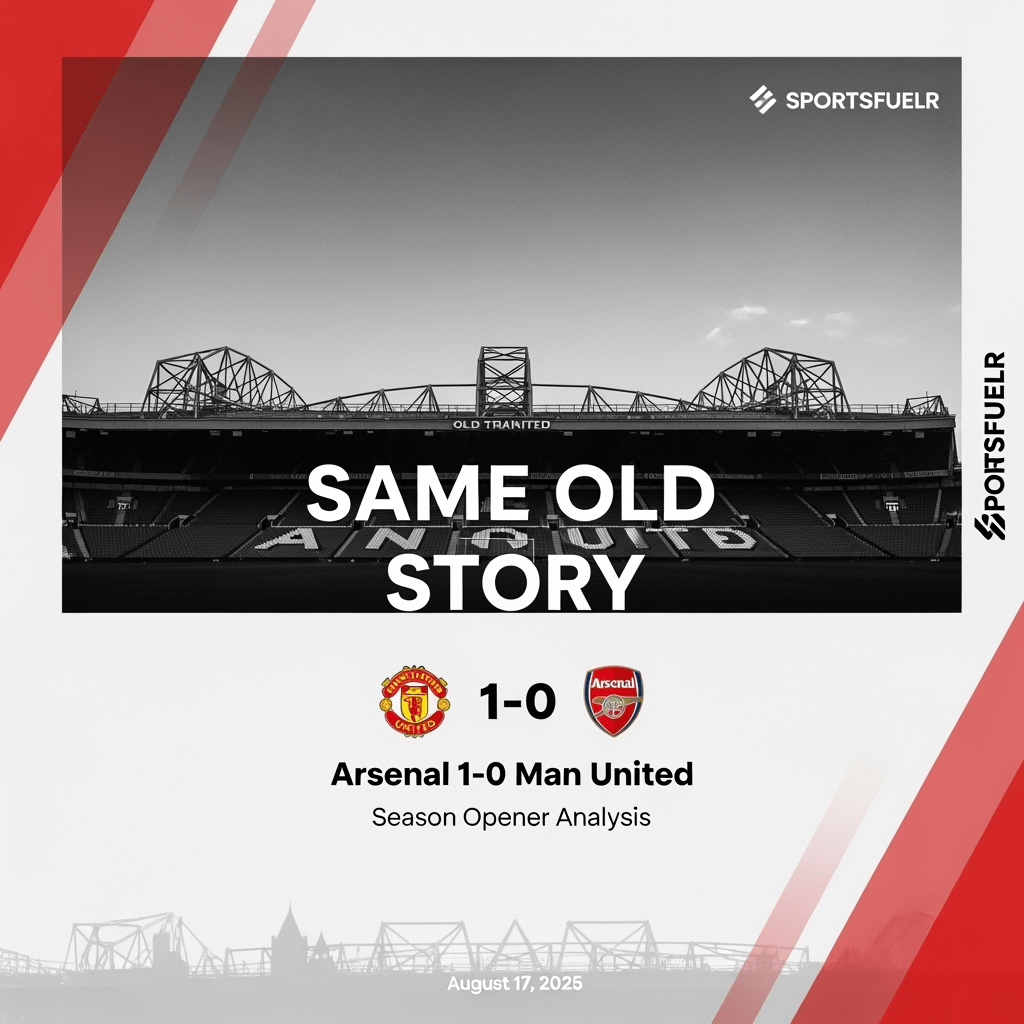
    Arsenal 1-0 Manchester United. The scoreline tells the story, but the details cut deeper.

    HOW IT UNFOLDED

    Thirteen minutes. That’s all it took for reality to bite. Riccardo Calafiori’s header from Declan Rice’s corner should have been routine for any Premier League goalkeeper. Instead, Altay Bayindir’s howler gifted Arsenal the only goal they’d need.

    The Italian defender, making his own Premier League debut, couldn’t have asked for an easier introduction to English football. A simple header, a goalkeeper’s mistake, and suddenly Arsenal – runners-up for three straight seasons – had exactly what they came for.

    For the next 77 minutes, United huffed and puffed but couldn’t blow Arsenal’s house down. The Gunners defended with the composure of a team that’s been in these pressure situations before, weathering United’s second-half pressure with professional efficiency.

    THE NEW ERA THAT WASN’T

    All eyes were on United’s revamped front three. Sesko (£73.7m), Cunha (£62.5m), and Mbeumo (£71m) – the attacking trio that was supposed to replace the goals we lost when Marcus Rashford departed for Barcelona.

    The verdict? Promising but disjointed.

    Sesko showed glimpses of his quality on debut, earning a 6.5/10 rating from Goal.com for his hold-up play and movement. But he was starved of service, isolated up front as United’s midfield struggled to find him. The Slovenian striker held the ball up well and created space for teammates, but the killer pass rarely came.

    Cunha and Mbeumo flashed their talent in moments but couldn’t find the chemistry needed against Arsenal’s compact defensive shape. The Athletic’s tactical analysis was damning: “The new front three looked disjointed, with Sesko isolated and Cunha/Mbeumo struggling to find space against Arsenal’s compact defense.”

    ESPN’s Mark Ogden summed it up perfectly: “The £207m front three will need time to gel.” Time we hoped we wouldn’t need after spending that kind of money.

    MISSING PIECES

    The absence of key players was glaring, but not through injury – through poor squad management. Jadon Sancho, loaned out last season, remains in limbo and unlikely to ever play for United again. Rasmus Hojlund was told just a week before the season opener that he’s surplus to requirements and needs to find a new club, despite expressing his willingness to stay and fight for his place.

    Most telling of all? Alejandro Garnacho, one of United’s few bright sparks from last season, is currently exploring his options for a move – most likely to Chelsea – and is also unlikely to feature again. The Argentine was relegated to the bench as Amorim opted to start his three new signings in a 4-2-3-1 formation, but even that might be academic if he gets his desired move.

    Sky Sports highlighted the depth concerns: “United’s bench lacked attacking options with Sancho sold to Chelsea and Hojlund still recovering from injury. Only Garnacho provided attacking depth.” Except even Garnacho’s future remains uncertain.

    ARSENAL’S STATEMENT

    While United grappled with new combinations and squad chaos, Arsenal looked like a team ready to go one better than their three consecutive second-place finishes. They’ve won 8 of their last 12 meetings with United, and this felt like another step toward finally getting over the line in the title race.

    Their defensive solidity was impressive – weathering United’s second-half pressure with the composure of a team that’s been here before. This Arsenal side knows how to manage games, and they managed this one perfectly.

    Calafiori’s goal was the perfect encapsulation of Arsenal’s set-piece prowess under Mikel Arteta. Rice’s delivery was inch-perfect, the movement was well-drilled, and when Bayindir gifted them the goal, they had the maturity to see it out.

    TACTICAL BREAKDOWN

    Ruben Amorim’s decision to start all three new signings was bold but ultimately backfired. The 4-2-3-1 formation looked promising on paper:

    United XI: Bayindir; Dalot, Maguire, Martinez, Shaw; Casemiro, Mount; Mbeumo, Fernandes, Cunha; Sesko

    But in practice, the front three never clicked. Sesko was isolated, Cunha drifted too wide, and Mbeumo struggled to impact the game from the right flank. The midfield couldn’t provide the service, and Arsenal’s compact 4-3-3 nullified United’s attacking threats.

    Arsenal, meanwhile, were everything United weren’t – organized, patient, and clinical when their moment came.

    FAN REACTION: FAMILIAR FRUSTRATION

    The social media reaction told the story United fans didn’t want to hear:

    “New players, same problems”“How do you tell Hojlund he’s not wanted a week before the season?”“We’re losing Garnacho to Chelsea while starting three debutants”“Same old United – no planning, no strategy”“£207m spent and we still can’t beat Arsenal at home”

    After the cautious optimism of pre-season – 67% of fans were “cautiously optimistic” according to recent surveys, with 89% excited about the new signings – this felt like a harsh return to reality.

    The Manchester Evening News captured the mood perfectly: “United fans expressed frustration on social media: ‘New players, same problems’ and ‘We’re missing Rashford already’ were common themes.”

    THE BIGGER PICTURE

    This wasn’t just any defeat. This was the season opener. At home. Against a direct rival. With a squad in complete disarray behind the scenes.

    While United spent £207 million on new attackers, they’ve simultaneously pushed out existing talent. Telling Hojlund he’s not wanted a week before the season starts? Allowing Garnacho to explore moves to direct rivals? It’s squad management that borders on the chaotic.

    The new signings aren’t just replacing Rashford’s goals – they’re having to replace an entire attacking structure that’s been dismantled through poor planning and communication.

    United came into this season needing to prove they could compete with the elite again after their worst-ever campaign. Instead, they reminded us why Arsenal have been runners-up three times while United have been also-rans.

    WHAT’S NEXT?

    The new front three will need time – that much is clear. Sesko, Cunha, and Mbeumo have the talent, but talent alone doesn’t win Premier League games. Chemistry does. Understanding does. The kind of instinctive interplay that comes from months, not minutes, together.

    Amorim has work to do. The formation needs tweaking, the service to Sesko needs improving, and somehow he needs to find a way to get the best out of £207 million worth of attacking talent while managing a squad in transition.

    The Portuguese manager will also need to address the goalkeeping situation. Bayindir’s error was costly, and questions will inevitably be asked about whether he’s ready for the Premier League’s intensity.

    ARSENAL’S TITLE CREDENTIALS

    For Arsenal, this was exactly the kind of performance that suggests they might finally get over the line. Three consecutive second-place finishes have been painful, but they’ve learned from each near-miss.

    The composure they showed in seeing out the victory, the tactical discipline, the set-piece execution – these are the hallmarks of champions. If they can maintain this level throughout the season, this might finally be their year.

    THE UNITED REALITY CHECK

    But here’s the thing about being a United fan – we’ve been here before. New signings, new hope, same disappointments. The difference this time? We can’t afford for it to be the same story again.

    The club’s decision-making remains questionable. Spending £207 million while simultaneously alienating existing talent is peak modern United dysfunction. How do you build team chemistry when half your squad is looking for the exit?

    Arsenal are favorites for a reason. They’ve been building toward this for years, and performances like this show why they might finally get there. United, meanwhile, are still building. Still hoping. Still waiting for that new era to actually begin.

    The bookmakers had Arsenal as slight favorites at 2/1 before kickoff. After this performance, those odds look generous.

    FINAL THOUGHTS

    One game doesn’t define a season, but it certainly sets expectations. For Arsenal, this was a statement of intent – we’re ready to take that final step. For United, it was a harsh reminder that spending money and creating chemistry are two very different things.

    The long road back to the top just got a little longer. New signings or not, some problems run deeper than personnel. Until United address the chaos behind the scenes, performances like this will keep happening.

    Same old story, different season.


    What did you think of United’s performance? Were you surprised by Amorim’s team selection? Share your thoughts in the comments below.

    #MUFC #PremierLeague #Sesko #Cunha #Mbeumo #OldTrafford #SeasonOpener


    MATCH FACTS:

    • Result: Manchester United 0-1 Arsenal
    • Goal: Riccardo Calafiori 13′
    • Attendance: 74,310 (Old Trafford)
    • Referee: Michael Oliver
    • United Debuts: Benjamin Sesko, Matheus Cunha, Bryan Mbeumo
    • Key Stats: Arsenal have now won 8 of their last 12 meetings with United

  • The Beckham Transfer: A £25 Million Masterclass in Strategic Business Warfare

    The Beckham Transfer: A £25 Million Masterclass in Strategic Business Warfare

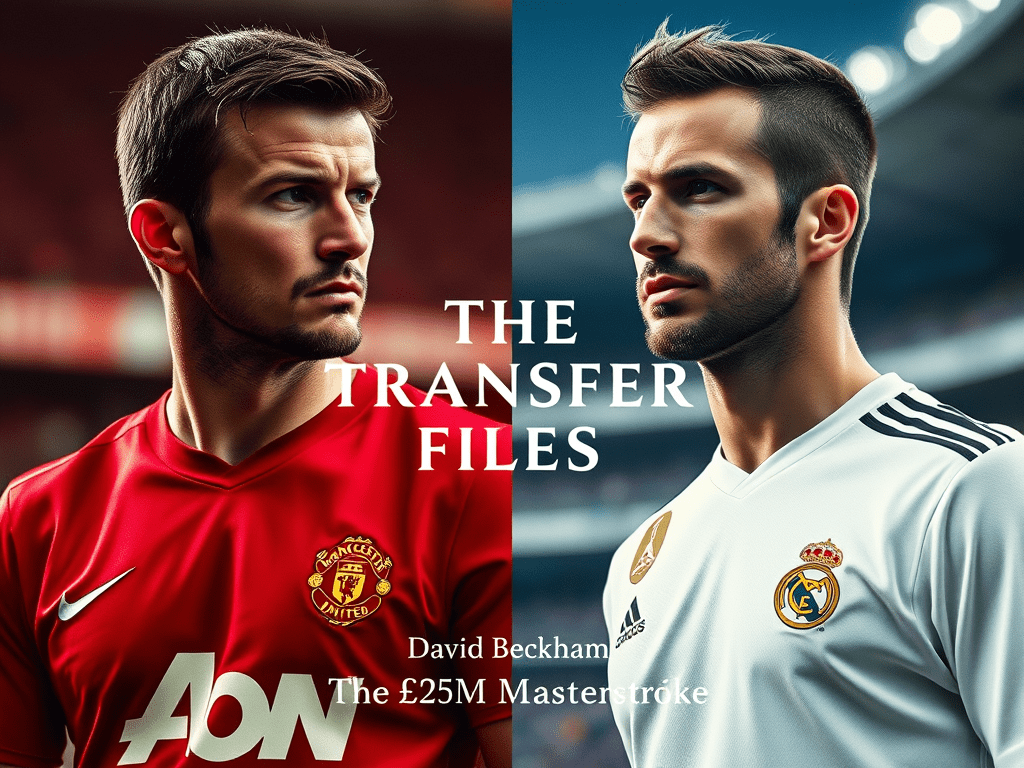
    How a flying boot, wounded pride, and calculated risk created the template for modern football’s mega-deal economy


    The Perfect Storm: When Personal Meets Professional

    February 15, 2003. Old Trafford’s home dressing room. Manchester United had just suffered a humiliating 2-0 defeat to Arsenal in the FA Cup fifth round – a result that would effectively end their treble hopes. What happened next would change football history.

    Sir Alex Ferguson, seething with rage, kicked a boot in frustration. It struck David Beckham above the left eyebrow, requiring stitches. But this wasn’t just an accident – it was the explosive culmination of a relationship that had been deteriorating for months.

    The Celebrity Problem

    Ferguson had grown increasingly concerned about Beckham’s transformation from footballer to global celebrity. The manager who had nurtured the boy from the academy into England’s golden boy now watched as his creation threatened to eclipse the institution itself. Victoria’s Spice Girls fame, the fashion shoots, the Hollywood lifestyle – Ferguson saw these as distractions from the singular focus required at Manchester United.

    “I felt David’s work rate was dropping. His head had been turned by the interest from Real Madrid.” – Sir Alex Ferguson

    The tension had been building for over a year. Ferguson noticed subtle changes in Beckham’s approach to training, his body language during team meetings, and most critically, his willingness to track back defensively during matches. The manager who had built his reputation on extracting maximum effort from every player couldn’t tolerate what he perceived as complacency from his most high-profile star.

    But this wasn’t simply about work rate. Ferguson understood that Manchester United’s success depended on maintaining a delicate ecosystem where individual brilliance served collective ambition. He had managed superstars before – Eric Cantona, Roy Keane, Ryan Giggs – but each had understood that the club came first. With Beckham, Ferguson sensed a fundamental shift in priorities that threatened the very culture he had spent decades building.

    Tactical Evolution and Displacement

    The arrival of Juan Sebastián Verón in 2001 for £28.1 million had already signaled a tactical shift that would ultimately make Beckham expendable. Ferguson was experimenting with formations that didn’t necessarily require Beckham’s specific skill set. The 4-4-2 diamond, the 4-3-3 – systems where pace and pressing mattered more than Beckham’s metronomic crossing ability.

    This tactical evolution reflected Ferguson’s broader philosophy of constant adaptation. He had recognized that football was becoming faster, more athletic, and more tactically sophisticated. The traditional English winger who hugged the touchline and delivered crosses was becoming obsolete in elite European competition. Ferguson needed players who could press aggressively, transition quickly between attack and defense, and operate effectively in multiple positions.

    Beckham, for all his technical brilliance, was becoming a tactical liability in this new paradigm. His lack of pace made him vulnerable on the counter-attack, his defensive positioning was often questionable, and his reluctance to drift infield limited United’s tactical flexibility.

    The Point of No Return

    The boot incident wasn’t the cause – it was the symbol. Two alpha personalities, each believing they were protecting Manchester United’s interests, had reached an impasse. Ferguson saw Beckham as a distraction; Beckham saw Ferguson as holding him back from global superstardom.

    What made this conflict particularly tragic was that both men were arguably right from their respective perspectives. Ferguson’s concerns about Beckham’s declining work rate and increasing celebrity distractions were legitimate. Conversely, Beckham’s frustration with his reduced role and tactical displacement was equally valid. He remained one of the world’s most technically gifted players, capable of changing games with a single cross or free-kick.

    “My biggest regret in my career was leaving United for Real Madrid.” – David Beckham

    But by March 2003, the die was cast. The relationship had deteriorated beyond repair, and both men knew that one of them would have to leave.


    The Economic Masterstroke: Why £25 Million Was Genius

    When Real Madrid’s £25 million bid was accepted in June 2003, football fans were stunned. The world’s most recognizable footballer, sold for what seemed like a bargain price? This wasn’t incompetence – it was calculated brilliance from both sides, representing one of the most sophisticated pieces of business negotiation in sports history.

    United’s Strategic Calculation

    Ferguson and the United board understood something crucial that escaped most observers: Beckham’s commercial value had peaked, but his football value was declining. At 28, with his pace already diminishing and his tactical fit increasingly questionable, they were selling at the optimal moment.

    United’s analysis went far beyond the immediate transfer fee. They recognized that prolonged negotiations would:

    • Destabilize the squad
    • Create an unwanted media circus
    • Potentially divide the dressing room between Beckham loyalists and Ferguson supporters

    The cost of this disruption could easily have exceeded any additional transfer fee they might have extracted through harder negotiation.

    More importantly, United’s leadership understood that Beckham’s presence was becoming tactically restrictive. Ferguson’s desire to implement more fluid, pressing-based systems was being hampered by the need to accommodate a player whose style belonged to a previous era of football.

    Real Madrid’s Galáctico Vision

    Meanwhile, Florentino Pérez harbored a vision that transcended traditional football thinking. His Galáctico policy wasn’t merely about assembling talented players – it was about transforming Real Madrid into a global entertainment conglomerate that happened to play football.

    The strategy had been methodically executed:

    • 2000: Luís Figo (£37 million) – establish credibility
    • 2001: Zinedine Zidane (£46 million) – add artistic brilliance
    • 2002: Ronaldo (£30 million) – bring goal-scoring glamour
    • 2003: David Beckham (£25 million) – unlock global markets

    Beckham’s signing completed this carefully constructed puzzle by unlocking the most lucrative markets of all: Asia and America, where his celebrity status transcended sport entirely.

    The Commercial Revolution

    The commercial returns were immediate and staggering:

    Shirt Sales: Beckham’s jersey became the fastest-selling in Real Madrid’s history, with explosive sales in previously untapped markets.

    Sponsorship Boom: Global brands recognized the marketing power of associating with both Beckham and Real Madrid, leading to exponential increases in sponsorship deals.

    Brand Transformation: Industry analysts estimated that Real Madrid’s brand value increased by over £300 million within two years of Beckham’s arrival.

    The transfer fee became irrelevant – Beckham had essentially paid for himself before completing his first training session. More significantly, the deal established a new paradigm where player transfers were evaluated not just on sporting merit, but on their potential to transform entire organizations into global brands.


    Performance & Legacy: The Long Game Revealed

    Initial Skepticism and Adaptation

    Beckham’s arrival at the Santiago Bernabéu was met with skepticism from Spanish media, who questioned whether the English midfielder possessed the sophistication required for La Liga’s more cerebral approach. His first season yielded no trophies, leading critics to dismiss him as an expensive marketing gimmick.

    But Pérez’s strategy was never designed for immediate gratification – it was about long-term transformation of both the club and the sport itself.

    The Professional Reinvention

    Beckham’s adaptation process became a fascinating study in professional reinvention. Recognizing that his traditional right-wing role wouldn’t translate directly to Spanish football’s more fluid systems, he gradually evolved into a more complete central midfielder.

    His crossing ability remained world-class, but he developed new dimensions:

    • Improved positional discipline
    • Better understanding of space and timing
    • A telepathic partnership with Zidane that elevated both players

    By his second season, the transformation was complete. Beckham had not only silenced his critics but had become integral to Real Madrid’s tactical setup. The vindication came in 2007 when Real Madrid won La Liga, their first title in four years.

    The Transfer Market Revolution

    The transfer’s influence on football’s broader ecosystem became apparent as other clubs began adopting similar strategies:

    Cristiano Ronaldo to Real Madrid (2009): £80 million – followed the Beckham template exactly, with massive commercial returns justifying the fee.

    Neymar to PSG (2017): €222 million – designed primarily to elevate PSG’s global profile and unlock new markets.

    Messi to PSG (2021): Free transfer but massive commercial coup, proving the enduring power of the Beckham model.

    The Ferguson Vindication

    Perhaps most significantly, the deal validated Ferguson’s decision to prioritize team harmony over individual brilliance. United’s post-Beckham era proved remarkably successful:

    • Cristiano Ronaldo (2003): £12.24 million – became the world’s best player
    • Wayne Rooney (2004): £25.6 million – became United’s all-time top scorer
    • Three Premier League titles and one Champions League in the following years

    Ferguson had demonstrated that even the most valuable assets should be sacrificed when they threaten the collective mission.


    The Strategic Lessons for Modern Business

    The Beckham transfer offers five key principles that continue to influence modern sports business:

    1. Strategic Timing Over Maximum Price

    United’s willingness to accept £25 million rather than hold out for more demonstrated the value of selling at the optimal moment rather than chasing the highest possible fee.

    2. Brand Building as Primary Strategy

    Real Madrid’s approach proved that transfers could be primarily about building global brands rather than just improving teams, fundamentally changing how clubs evaluate potential signings.

    3. Cultural Fit Over Pure Talent

    Ferguson’s decision showed that maintaining team culture and tactical coherence often trumps retaining individual brilliance, no matter how valuable that talent might appear.

    4. Long-term Vision Over Short-term Results

    Pérez’s patience in building the Galáctico brand demonstrated that the most successful strategies often require years to fully materialize.

    5. Personal Relationships Drive Business Decisions

    The breakdown between Ferguson and Beckham illustrated how personal dynamics can override rational business considerations, for better or worse.


    The Enduring Impact

    Twenty years later, the Beckham transfer remains the gold standard for how personal relationships, strategic vision, and commercial acumen can combine to create transformational change. It proved that the biggest risks often yield the greatest rewards, and that sometimes the most controversial decisions become the most vindicated.

    For Manchester United, it marked the end of an era but the beginning of their most successful period. For Real Madrid, it validated a commercial strategy that would make them the world’s most valuable football club. For David Beckham, it launched a post-football career that has made him wealthier than his playing days ever could.

    But perhaps most importantly, it showed that in modern football – as in modern business – success comes to those who can see around corners, anticipate change, and have the courage to make difficult decisions before they become obvious to everyone else.

    The beautiful game had become beautiful business. And it all started with a flying boot, wounded pride, and a £25 million masterstroke that nobody saw coming.


    What other football transfers would you analyze through a business lens? The intersection of sport and strategy continues to fascinate – and there are plenty more stories where personal drama meets commercial genius.